Sign in
Sign in to your Starks.Design account.
Enough with the carousel
How many people actually click through to slide three of your rotating header?
Scrollen zum anschauen
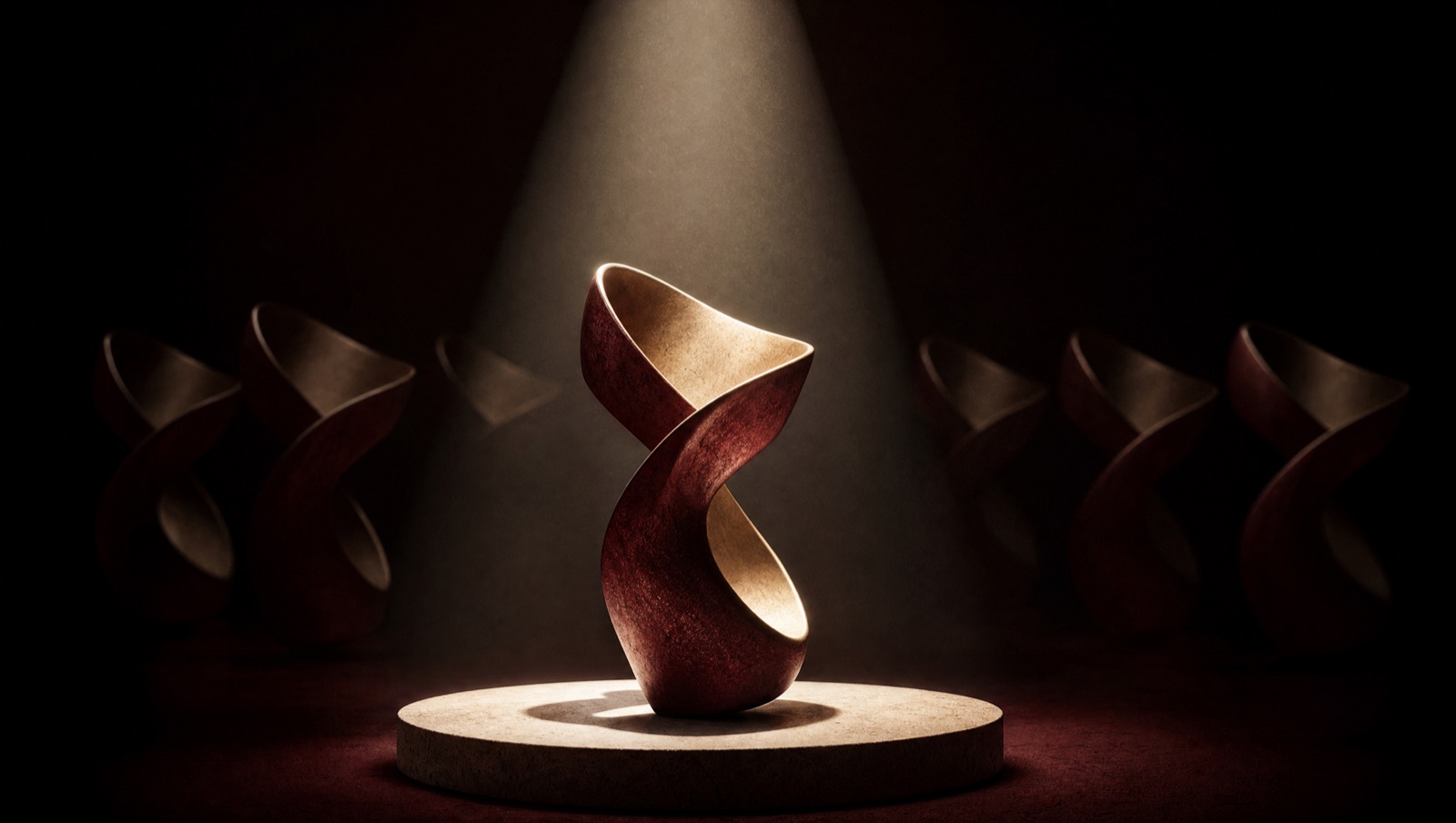
The carousel keeps turning. Your visitors don't.
There's this one thing almost every other company website has: the rotating header. A big image up top that flips over every few seconds. Slide one: the team. Slide two: an offer. Slide three: some line about quality and tradition.
The problem isn't that it's ugly. The problem is that it doesn't work. The numbers have been clear for years: almost everyone looks at slide one. A fraction look at slide two. Practically nobody looks at slide three. So you've built three messages — and ninety percent of your visitors see only one. Which one? Chance decides that, not you.
On top of that: the carousel often jumps on at the exact moment someone's reading. You start a sentence, and it's gone. That's about as charming as a conversation partner who changes the subject mid-sentence.
Why it's everywhere anyway
Honestly: because it's convenient. The carousel is the diplomatic compromise when nobody in the company wants to decide. Sales wants its offer up top. Management wants the mission statement. Marketing wants the new campaign. So it all goes in, neatly one after another, and nobody's offended.
Except the visitor. They're confused. And a confused visitor doesn't click, they leave.
A homepage isn't a shop window. It's a salesperson.
Picture a good salesperson. They don't greet you with five sentences at once. They say one clear opening line that lands, then they guide you. That's exactly what a homepage should do.
What works in 2026 is unspectacular — and that's precisely why it's rare:
- One hero instead of five. One strong image, one clear statement of what you do and for whom. No back-and-forth, no slideshow. One message everyone grasps in two seconds.
- One clear button. One most-important action per page — call, enquire, book an appointment. If five buttons all shout equally loud, none of them shouts. Give the most important one the most weight.
- Real images instead of stock-photo graveyards. Nobody believes the smiling headset team from the image library any more. A real photo of your workshop, your shop, your people beats any glossy stock image.
- Less text, more answer. Visitors don't read, they scan. They're looking for the answer to one question: "Am I in the right place?" Answer that first, everything else after.
The courage to leave a gap
Good web design in 2026 isn't more, it's less. White space isn't wasted space, it's the quiet in which the important thing can do its work. The hard part isn't the technology. The hard part is the decision about what's allowed to go.
And yes, that's uncomfortable. Putting one thing front and centre means putting four things in the back. But that's exactly the difference between a page that shows everything — and one that sells something.
Shop
Tools, Vorlagen und Workflows aus meiner Praxis.
Digitale Produkte für Designer, Unternehmen und Teams, die schneller zu besseren Markenauftritten, Präsentationen und KI-Workflows kommen wollen.