
Sign in
Sign in to your Starks.Design account.
Brand Style Guide
One document, one standard — no more three logo versions in circulation.
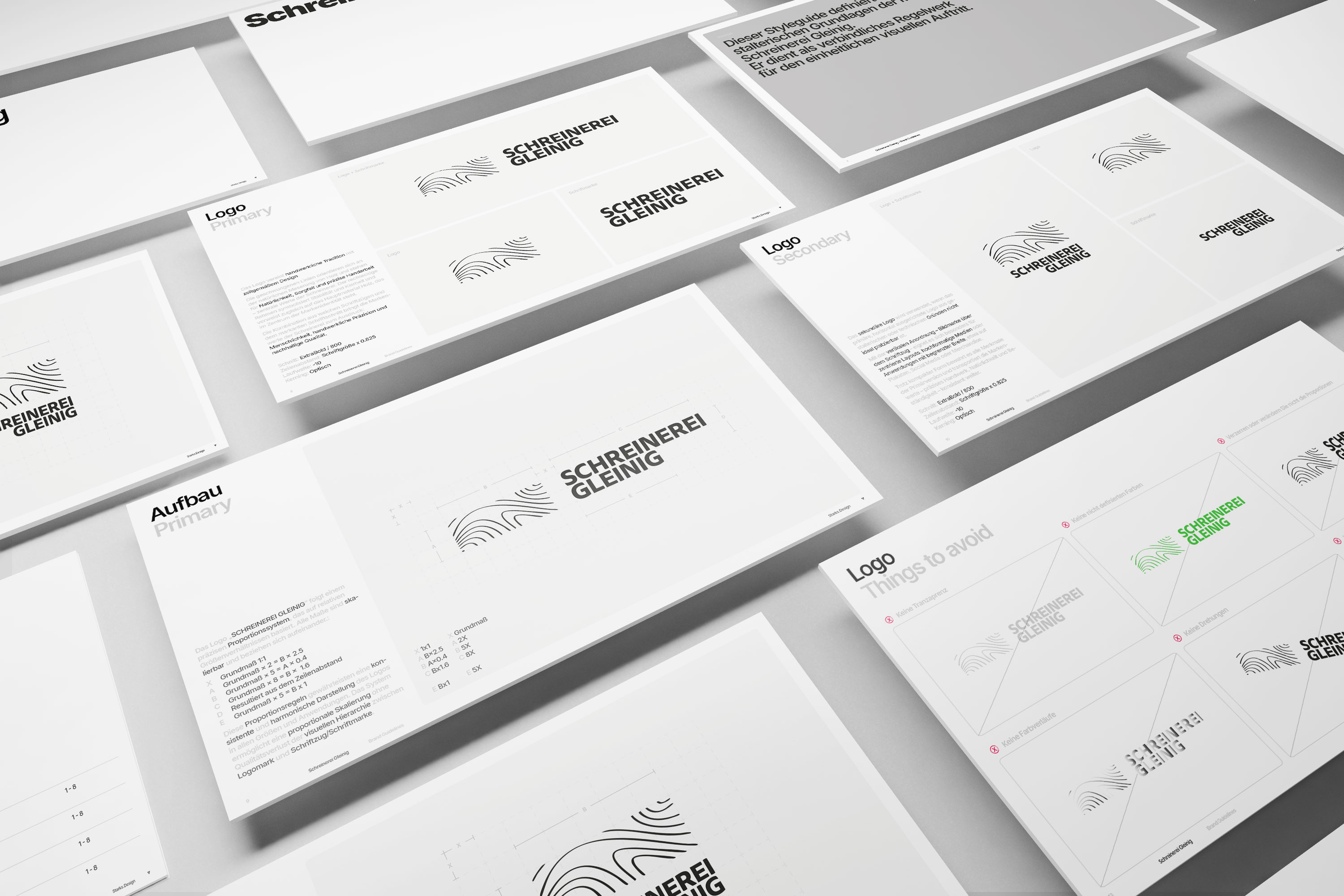
Was die Leistung umfasst
What a brand style guide does for you
Most brand manuals are 80-page PDFs that get sent once and never opened again. Logos go into circulation in four different variants, colours shift depending on the tool, typography gets interpreted instead of applied. The effort of consistency falls back on individual employees day to day — they correct what should have been settled beforehand.
I build brand style guides as a working tool, not as a documentation chore. Concretely: logo rules with real application examples (instead of abstract clear-space diagrams), a colour system with codes for print, web and app, a type hierarchy with concrete size scales, imagery with do's and don'ts on real examples. Available online — as a Webflow page, a Figma library or a Notion workspace — so searching, linking and updating actually work.
Your team finds the right application in 30 seconds, not in ten minutes of searching and asking. External suppliers get a clear standard, not „just do something on brand". And when the manual needs updating after two years, it's an upkeep task — not a rebuild.
So gehe ich vor
How I approach brand style guides
01 — Inventory. Which rules already exist (including implicit ones), where conflicts arise between users today, what gets misunderstood day to day. Real use cases instead of theoretical completeness.
02 — Structure. Which rules belong in the guide — logo, colour, type, imagery, tone, layout principles. Which don't — those go into specialist manuals (web guide, social templates) instead of the central document.
03 — Production. Build the guide as a working document — online format, searchable, with real examples instead of diagrams. Per section: what's allowed, what isn't, why.
04 — Activation. Roll it out with the team: a 30-minute walkthrough, clarify questions, set bookmarks. Only then does the guide become the standard — not when it's sent.
FAQ
Häufig gestellte Fragen
A PDF template is enough if it gets opened when it's needed. In practice that rarely happens — PDFs get filed once and never searched for again. Online style guides (as a Webflow page, a Figma library or a Notion workspace) are searchable, linkable and actually used in day-to-day work. The effort for a good online format is barely higher than for a PDF — and the impact is considerably better.
Wherever your team already works. For Webflow teams, often as an internal Webflow page; for design teams, as a Figma file with a component library; for product-led teams, as a Notion workspace. What matters is that the URL is in the onboarding material and the guide is reachable from the intranet — otherwise it only lives in the email it was sent in.
When the brand evolves — not otherwise. A good style guide is robust against small changes. Updates become necessary when new touchpoints appear (an app, a new sub-brand, new channels) or when usage rules have become unclear within the team. The typical update frequency is once or twice a year — not monthly.
Ideally one person in the marketing team who gets to call themselves brand manager — even if it's only 10% of the role. In smaller teams, often leadership themselves. What matters isn't the hierarchy, but that responsibility is clear. For larger updates I can step in — for smaller adjustments the team should be able to work on its own.